Punching Upwards and Finding A Mission
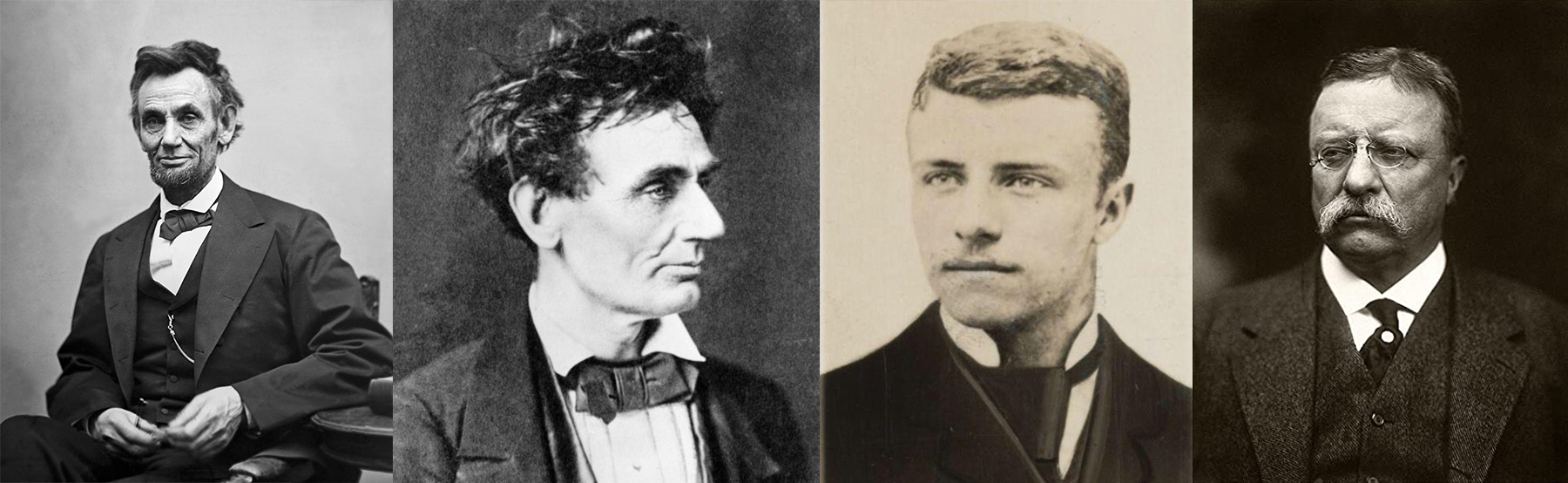
My two political heroes have always been Abraham Lincoln and Teddy Roosevelt -- Lincoln, because he had lived and worked not too far from St. Louis (around Springfield and southern Illinois, in the 19th century), and Teddy, because he was born a weakling and through sheer willpower transformed himself into a courageous leader. I admired them, because to me they represented the old, mythological promise of America - the ability to rise up from your circumstances, and through thick and thin, and constant adversity and opposition, find your way to lead others and change the world. Despite almost reaching 30, I continue to have the faith and naivete, that this path is possible for me.
Growing up in Hong Kong, and surrounded by then-relative prosperity, I had a difficult time finding inspirational figures and mentors. As a small kid scared of almost everything, the most inspirational aspect of Hong Kong was its urbanism and architecture. Living amongst spectacular shopping malls, escalators, office buildings, aerial walkways, and underground subways systems was like living in a giant playground, where every new perspective brings out new discoveries and cinematic spaces. I was just a number in a vast urban machine. The city was exhilarating, and the adults, all older and stricter than me, harsh and terrifying. I did not know at the time, but the place was the perfect microcosm of globalization in the 1990's, and the city would never reach such great heights and prominence again...
In Missouri, I left the hi-tech, gilded environs of Hong Kong and found myself in an alien, sparse landscape. On the other side of the world, my family and I struggled as fresh faced immigrants, adjusting to the world of automobiles, highways, big box stores, and single-family home in the Bush-era, promised utopia of middle, conservative America. Here, the psychological map of existence was much less sectional, as in the elevators and escalators of Hong Kong, and more planometric, where the land and the grid reigned supreme. Here, I encountered individuals, not masses, and I had the growing awareness of the importance of my position in a nation, and not only my position in a city. I learned as much as I can about the English language, and American history, and I placed myself in the narrative of a country of self-made people, a country that rose from agriculture and industry to on the Moon, where I can rise and make an impact, as long as I put in the work. And, perhaps, one day I daydreamed, I can go back to the global, multi-colored city of my youth, a returning hero in my dreams.
Inevitably, even I as I migrated to New York and Boston, I encountered the harsh realities of these visions. Just as people change, the world changes along with. Confronting the issues and questions of adulthood, I found a society in stasis, and unable to address the pressing questions of the day. Hong Kong today looks much as it does from 20 years ago, yet its societal and political foundations has eroded, leaving behind a gilded facsimile, less a dynamic city and more a aggregate shopping mall. The city of dreams no longer. The Midwest has been left behind, its slow growth and perceived stability unable to compete with the rising cities of the West Coast and Texas. Long gone are the great industries of the past, and in their place an atomized, fragmented, and bifurcated landscape of a professional class and service economy workers. And all around us, and everywhere, is the comforting, escapist glow of technological gadgets, and a nausea-inducing backdrop of deteriorating ecosystems and climate change.
All time periods face their own set of insurmountable problems -- until those challenges are ultimately met. In the 1850's, Lincoln also faced a country in turmoil, though with a radically different set of challenges. America, confronting westward expansion, had to wrestle with the question of slavery in new territories. The Civil War was just around the corner. While the industrialists and abolitionists of the North debated the racist gentry of the South, speaking in lofty and moralistic terms, Lincoln was on the ground, confronting the real, pressing issues facing western settlers and frontier development. As a westerner with no formal education, he was looked down by both wealthy Northerners and landed Southerners as just a "rail splitter". All the while, Lincoln served as a champion of his local, and then regional, community, brokering conflicts and trading stories as a preeminent, albeit "small-time" prairie lawyer. As a young adult, he read all the books he could get his hands on, and ran several unsuccessful campaigns for public office before serving as a middling one-term state senator. Lincoln confronted multiple bouts of depression, and struggled with mental health throughout his life. And yet --- and yet -- he found the inner strength to keep persisting, and took all the shots he could get. His first big break came during his legendary Lincoln-Douglas Debates of 1858, where he debated Democrat Stephen A. Douglas for the U.S. Senate. Though he lost the race, the publicity of the orations laid the foundations of his 1860 presidential run. His second big break came during the 1860 Republican Convention, where Lincoln was the "dark horse" candidate for the Republican ticket. While the other three candidates - Seward, Chase, and Bates - fought each other and polarized different factions of the party, Lincoln "swept in" as the "least polarizing" candidate, and ultimately united the party and won the primary. In my mind, Lincoln had the audacity to improve himself and lead communities, and all the while let his opponents underestimate him over and over and over again, until he finally made it as a "person who would leave a significant mark on the lives of other men." Lincoln kept punching upward to defy the odds, and that is a vision of leadership any American can rally behind.
In the 1890's, Teddy Roosevelt also faced a country undergoing dramatic change. Industrial cities had swelled and expanded in great numbers, with a record number of European immigrants seeking jobs and opportunities in factories. Meanwhile, the successful industrialists and robber barons expanded corporate power unchecked, retreating to their extravagant East Coast and Californian estates (much like the Silicon Valley and Wall Street titans of today). In this increasing unequal America arrives Theodore Roosevelt. Coming from a long line of Dutch "Roosevelts" that settled in New York City early on, Teddy belonged to the "old money" class of America - while he lived comfortably and went to privileged schools, he was by no means a Rockefeller or a Carnegie. Initially, T.R. was a shy, sickly child who was homeschooled, and even in Harvard he was an uninspiring and lackluster student. However, his family encouraged him to improve himself through strenuous physical activity. Veering off from a career in science or business, which was "expected" of him from his social status, he fell into "less respectable" politics via the New York Republican Association, a "rough and tumble place" where he networked with officials, business leaders, and union folks. He even served a brief stint as New York City Police Commissioner, where he strolled the city, engaged ordinary people, and worked in futility to reform the corrupt department. Through these experiences of liaising with the public as a local official, Teddy found a way to merge his lofty, idealistic education at Harvard and Columbia with the hard-nosed reality of working society. His keen ability to relate to both the working and businesses classes inevitably helped him push through progressive reforms in the pro-business Republican Party, as well as settle labor strikes and riots as President. At a time when labor and capital presented opposing factions that could "break" the country, T.R. served as a unique middlemen who could broker the peace, and move the country forward as a powerful global force. He proved that leadership may be less about the powerful oppressing the weak, and more about seeing a problem across multiple lenses to break through a previously impossible impasse...
These stories and lessons drive my actions today, and solidify my belief that young Americans can and will succeed in transforming the country. I am tired of waiting for someone else to handle these problems, to push for changes in my industry, in government laws, and in my cities. I am tired of relying on our tech titans and venture capitalists to deliver us yet another world-changing gadget, and to further ossify society and decimate public investments. I am tired of an us versus them mentality between capital and labor, and between the professional and the working class. I am tired of being depressed about the future, and just waiting for the next global Chinese-U.S. Cold War, or climate catastrophe, to strike us. Most of all, I am sick and tired by the mentality that I cannot change these things, as an Asian American male with no inherited wealth, or a super fancy degree or salary --- that as a "designer" I am only expected to make things look nicer, or solve some minor technical problem in your program, your building, or your website. I am not so intelligent, or so wealthy, or so extraverted, but I can do so much more than you think. And I will learn. And I will show you how I can make change, not tomorrow, not later, but right now.